




Jul 20, 2026
PTFE Wax for Low COF Printing Inks
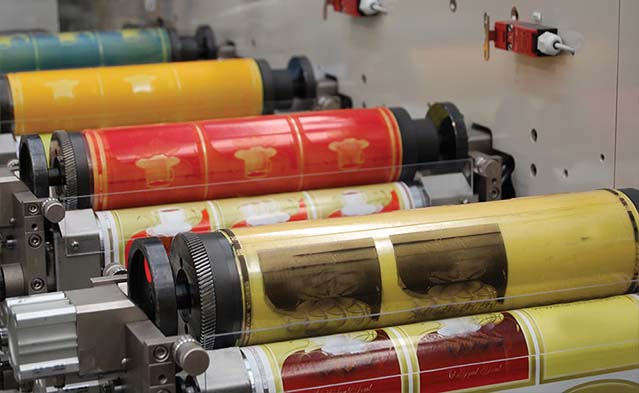
As flexible packaging and high-speed converting lines push for greater efficiency, friction control has emerged as a non‑negotiable quality parameter. Industry experts point to micronized PTFE wax as the go‑to additive for achieving consistently low coefficients of friction (COF) without compromising print quality. In modern printing ink formulations, the coefficient of friction is far more than a laboratory metric—it directly dictates how smoothly films, foils, and paper run through rewinders, sealers, cutters, and fillers. When COF is too high, converters face a cascade of costly issues: blocking in wound rolls, surface scratching, erratic feeding, and frequent line stoppages. Conversely, overly low friction can create register problems or stack slippage. Striking the right balance is therefore a primary formulation challenge. Micronized polytetrafluoroethylene (PTFE) wax has gained traction as a highly efficient solution for lowering COF in both solvent‑based and water‑based ink systems. Its unique chemistry—characterised by an exceptionally low surface energy—allows fine particles to migrate toward the ink film’s surface during drying or curing. There, they form an ultrathin, discontinuous lubricating layer that drastically reduces sliding resistance while preserving the underlying adhesion and mechanical properties. Beyond slip: anti‑blocking and abrasion resistance The benefits extend beyond simple slip enhancement. In flexible packaging, where printed webs are wound under high tension and stored for days or weeks, anti‑blocking performance is critical. PTFE wax minimises the adhesion between adjacent layers, preventing costly roll defects. Simultaneously, the same lubricating effect reduces scuffing and abrasion during transportation, ensuring that finished packages reach brand owners with pristine graphics. Choosing the right PTFE grade Not all PTFE waxes perform identically. Formulators must evaluate particle size, dispersion quality, and resin compatibility to achieve optimal results. Fine micronised grades—typically in the 3–6 µm range—yield smoother surfaces and superior clarity, which is especially valued in high‑definition printing on transparent films. Compatibility with polyester, polyurethane, nitrocellulose, and acrylic binders is equally essential for stable viscosity and consistent ink laydown. Dosage, however, requires careful calibration. Under‑dosing fails to deliver the desired COF reduction, while overdosing can dull gloss, impair intercoat adhesion, or cause plate build‑up. Most successful formulations fall within 0.5–3% by weight on total ink solids, but the optimal level varies with substrate, application method, and drying conditions. For instance, BOPP and PE films—common in snack food packaging—often respond well to finer PTFE particles combined with a secondary slip agent. PET films and aluminium foil, on the other hand, may benefit from coarser grades or blended systems that incorporate polyethylene wax, amide wax...
ดูเพิ่มเติม